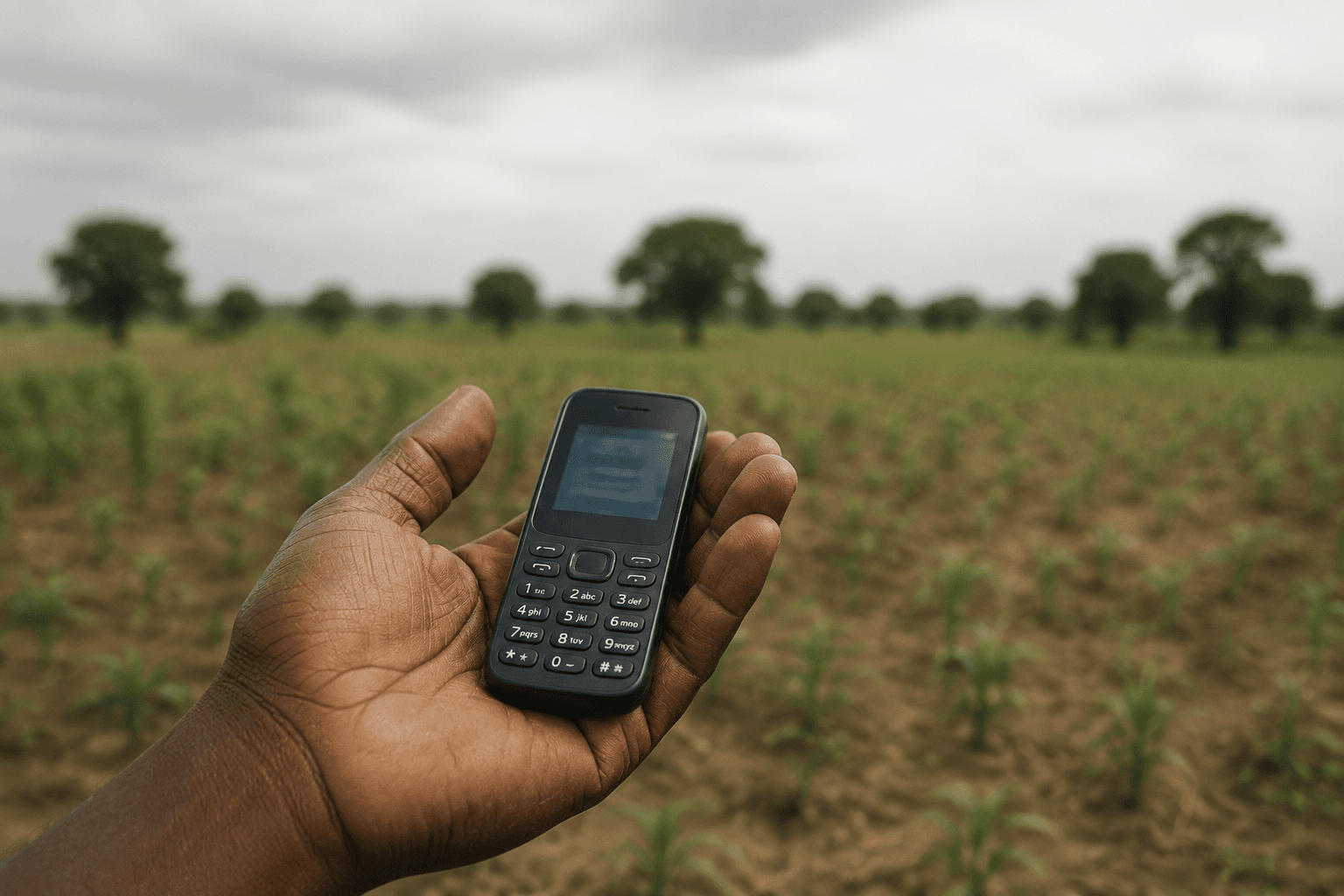
Building Offline-First: Why USSD Still Matters in African Agtech
Smartphones and stable internet are not universal in rural Africa. Here's how MechAfrica's architecture treats USSD and feature phones as first-class citizens, not fallbacks.
Designing for the Network You Actually Have
Most software is architected around an assumption: the user has a smartphone, a data plan, and a signal. That assumption breaks down fast once you leave the city center in most of the countries we operate in. For the farmers and service providers MechAfrica serves, a feature phone and a USSD session are often the only reliable path online.
So we flipped the usual build order. Instead of building a smartphone app and bolting on a "lite" USSD mode later, we designed the coordination logic — matching a farmer to a tractor operator, confirming a booking, settling payment — to work end-to-end over USSD first. The mobile and web apps for service providers are the layer built on top of that same core, not the other way around.
Why This Is Harder Than It Sounds
USSD sessions are stateless, character-limited, and can drop at any point in a multi-step flow. Every interaction has to be designed so a farmer can start a session, lose signal, and pick back up without losing their place or triggering a duplicate booking. That constraint shapes everything from our session state machine to how we structure confirmation messages.
Field Agents Close the Trust Gap
Technology alone doesn't solve rural onboarding. A USSD menu can't build trust the way a person can. That's why Field Agents are structural to MechAfrica, not a stopgap: they onboard farmers in person, explain how a booking works, and stay the human point of contact while the digital rails handle matching, scheduling, and mobile money settlement underneath.
Our Architectural Blueprint
- A single coordination core. Farmer requests, provider availability, and payment state live in one system that USSD, mobile, and web clients all read from — no divergent logic between channels.
- Mobile money as the default rail. Payments settle through mobile money first, with reconciliation built to handle intermittent connectivity on both sides of a transaction.
- Provider-facing tools for real-time visibility. Service providers get a live view of demand and matched jobs, so the coordination layer benefits both sides of the marketplace, not just the farmer.